
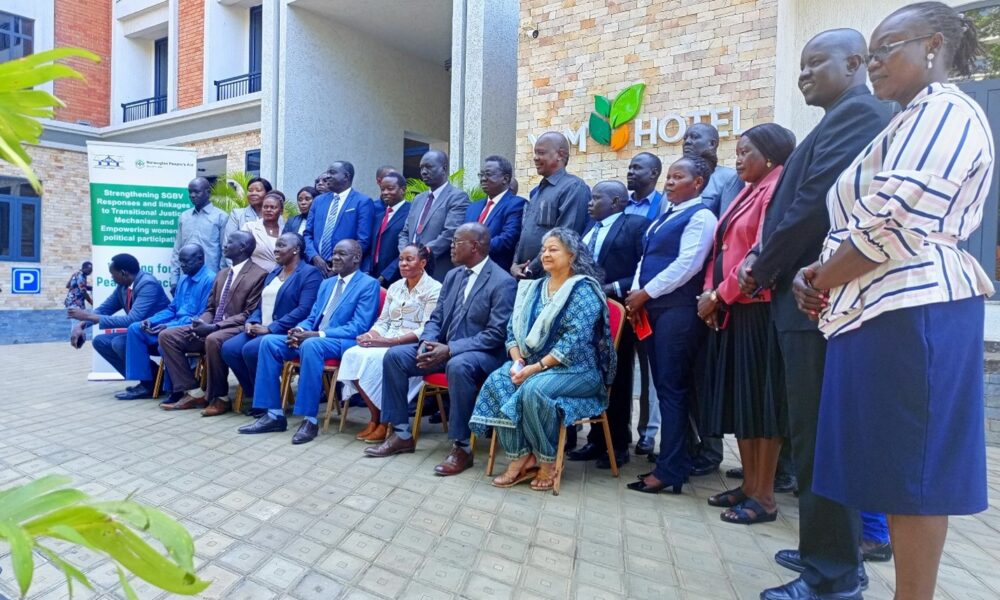
CIGPJ, NPA train judges on SGBV, transitional justice
 cigpj
cigpjThe Center for Inclusive Governance, Peace and Justice (CIGPJ), in partnership with Norwegian People’s Aid, has launched a three-day capacity building workshop for judges, aimed at strengthening responses to sexual and gender-based violence (SGBV) and linking them to transitional justice mechanisms.
The training for about 30 judges also seeks to empower women’s political participation in South Sudan.
Speaking during the opening session, Mr. Micheal Gorjin Kuol, Project Coordinator at Norwegian People’s Aid (NPA), emphasized the importance of legislative reform in tackling SGBV. He noted that enacting pending laws would be a milestone in the fight against sexual violence:
“I would also like to thank the judiciary of South Sudan. Your work is very key at this critical moment in South Sudan. In South Sudan we have our financial constitution and other provisions. But I know also Center for Inclusive Government, Peace and Justice are also pushing for the enactment of critical bills. These policies, if they are passed into law, they will also boost fight against GBV and sexual violence across the country,” Gorjin said
Sheila B. Keetharuth, Senior Women’s Protection Advisor at UNMISS, described the workshop as a critical step in strengthening judicial responses to survivors of SGBV, conflict-related sexual violence (CRSV), and gender-based crimes.
“This training, aiming at strengthening SGBV responses and linkages to transitional justice, is not just about legal procedures. It is about restoring dignity, ensuring accountability and building a justice system that is survivor-centered, trauma-informed and responsive to the lived realities of survivors,” she said.
Keetharuth underscored that survivor-centered justice should be at the heart of judicial practice.
“It seeks to ensure that survivors are treated with dignity and respect throughout all the stages of the justice process and that their voices are central to decision-making.” She noted
She urged judges to adopt trauma-informed approaches and pay attention to vulnerable groups, including children born of wartime rape, who often live in the shadows of stigma, identity loss and marginalization.
“I note you will explore how judges can integrate trauma-informed approaches in cases so that they do not re-traumatize survivors. I hope there is an opportunity to also discuss how to uphold the dignity and rights of children born of wartime rape, ensuring they are not forgotten in our pursuits for justice,” she stressed
Justice William Kaya, Director of Training at the Judiciary of South Sudan, highlighted the judiciary’s commitment to addressing SGBV through specialized training. He stressed the need for SGBV courts to be established across the country:
“Justice is not only for Juba and that is why we are bringing all this group to be trained from different areas of South Sudan so that we have GBV court in every state, if not in every county, because we believe that issues pertaining to GBV is prevalent, cannot be denied, and there are so many means of how to address it,” he said
Justice Kaya encouraged judges to engage actively during the workshop and participate in the discussions and learning sessions.
“You cannot know something that you do not know and that is why we are bringing you to this workshop to get very good idea about GBV issues so that when you go back to your areas you will be able to carry out your duty on this issue in a very professional way,” he said.
The training supported by the Norwegian government comes at a time when survivors of sexual violence in South Sudan continue to face barriers to justice, with advocates stressing the need for stronger laws, trauma-informed practices, and survivor-centered judicial processes.